


How to Weatherproof Your Front Door for Better Comfort
Your front door is a focal point for both appearance and energy efficiency in your home. Without proper sealing, it can let in drafts and let energy dollars slip right out. Weatherproofing your front door is a small project that can have a big impact on your comfort. Whether you are prepping for winter or keeping cool air in during summer, sealing those gaps pays off year-round. Handydads is here to guide you through how to tackle this straightforward handyman task.
Project Snapshot
Weatherproofing your front door involves inspecting for gaps, replacing old or damaged weatherstripping, sealing thresholds, and making sure your door sweeps are in good condition. The results are immediate: fewer drafts, a quieter home, and noticeable savings on energy bills. The whole project can typically be completed in under two hours, making it an easy weekend win for any homeowner.
Tools and Materials
Basic tools include a measuring tape, utility knife, screwdriver, staple gun or nails, and a caulk gun. Materials you'll likely need are weatherstripping (foam, rubber, or vinyl types), a new door sweep if needed, exterior-grade caulk, and cleaning supplies for prepping surfaces. Always double-check which type of weatherstripping best suits your specific door style for a snug seal.
Step-by-Step Instructions
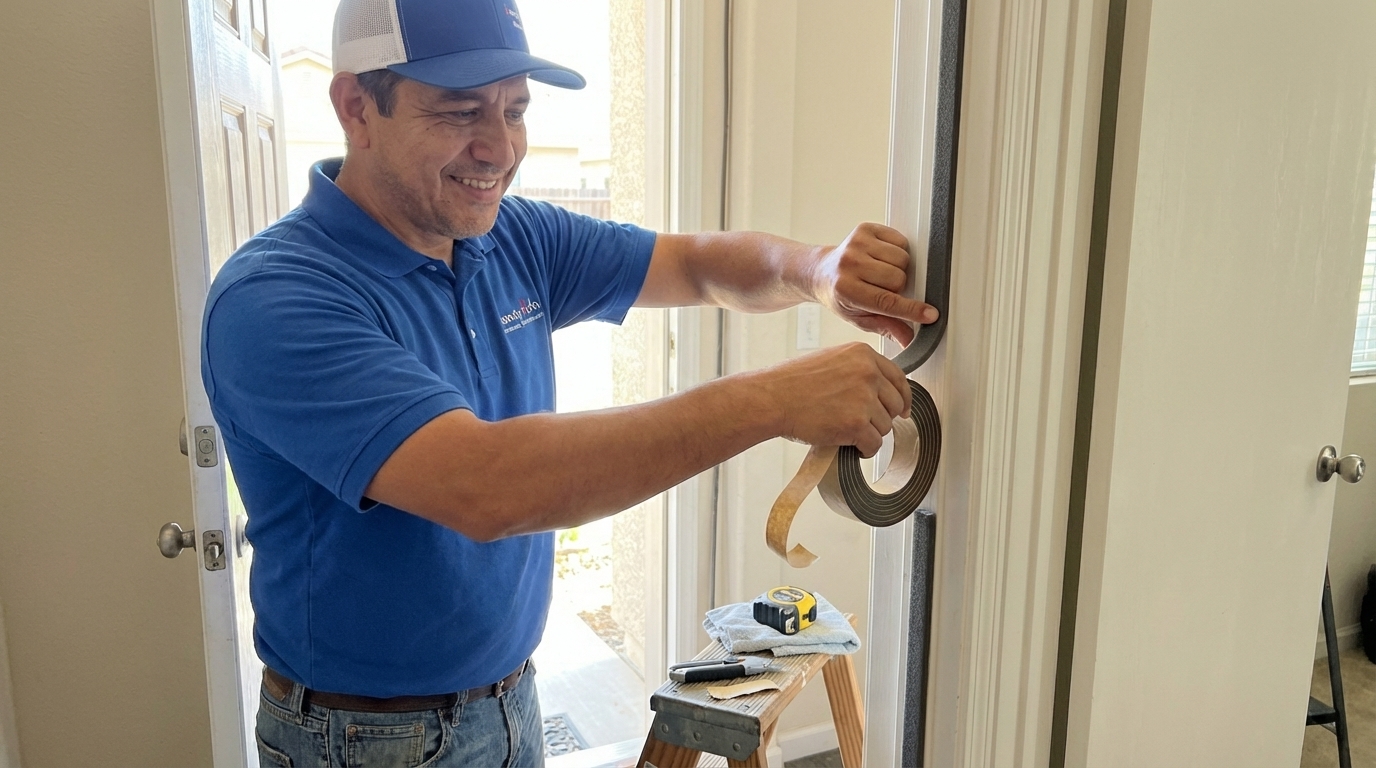
Begin by inspecting your door edges and frame for any visible gaps or worn weatherstripping. Remove any old adhesive, tacks, or nails holding previous materials with care. Clean all surfaces thoroughly to ensure good adhesion for the new strips. Cut your weatherstripping to fit, pressing it firmly in place along the door stops or frame as needed. Apply a fresh bead of caulk to seal any cracks around the door jamb, and consider installing a new door sweep at the bottom for extra protection.
From the Toolbox
A Handydads client once called us every fall when the wind started to whistle through his entryway. After walking through these weatherproofing steps with him, he was thrilled to find his house was cozier and his energy bills noticeably lower. Sometimes, the simplest fixes are the most rewarding when it comes to home comfort.
Top 5 Mistakes
Common mistakes include skipping surface cleaning before installation, using the wrong weatherstripping size, not securing the material properly, ignoring gaps around the door frame, and forgetting to check or replace the door sweep. Each shortcut can leave gaps for cold or hot air to sneak through, reducing the effectiveness of your efforts.
Tool and Material Recommendations
We recommend a closed-cell foam weatherstrip for longevity and ease of installation. Invest in a high-quality silicone door sweep that can handle heavy use. Use exterior grade clear caulk for sealing, as it holds up better against weather. A solid utility knife and caulk gun will make the job neater and faster. Don't skimp on measuring tools - a proper fit makes all the difference.
Quick Tips and Hacks
Always measure twice before cutting weatherstripping. Test your door after installation to ensure it closes easily and seals snugly. Use painter's tape for cleaner caulk lines. When replacing door sweeps, mark screw holes before drilling to keep things aligned. Store extra materials for future touch-ups.
Need a Hand?
Not sure if your weatherproofing will hold up or prefer a pro's touch? Call Handydads for expert door sealing and handyman services. We'll help keep your home cozy and energy efficient year-round!
Comments